
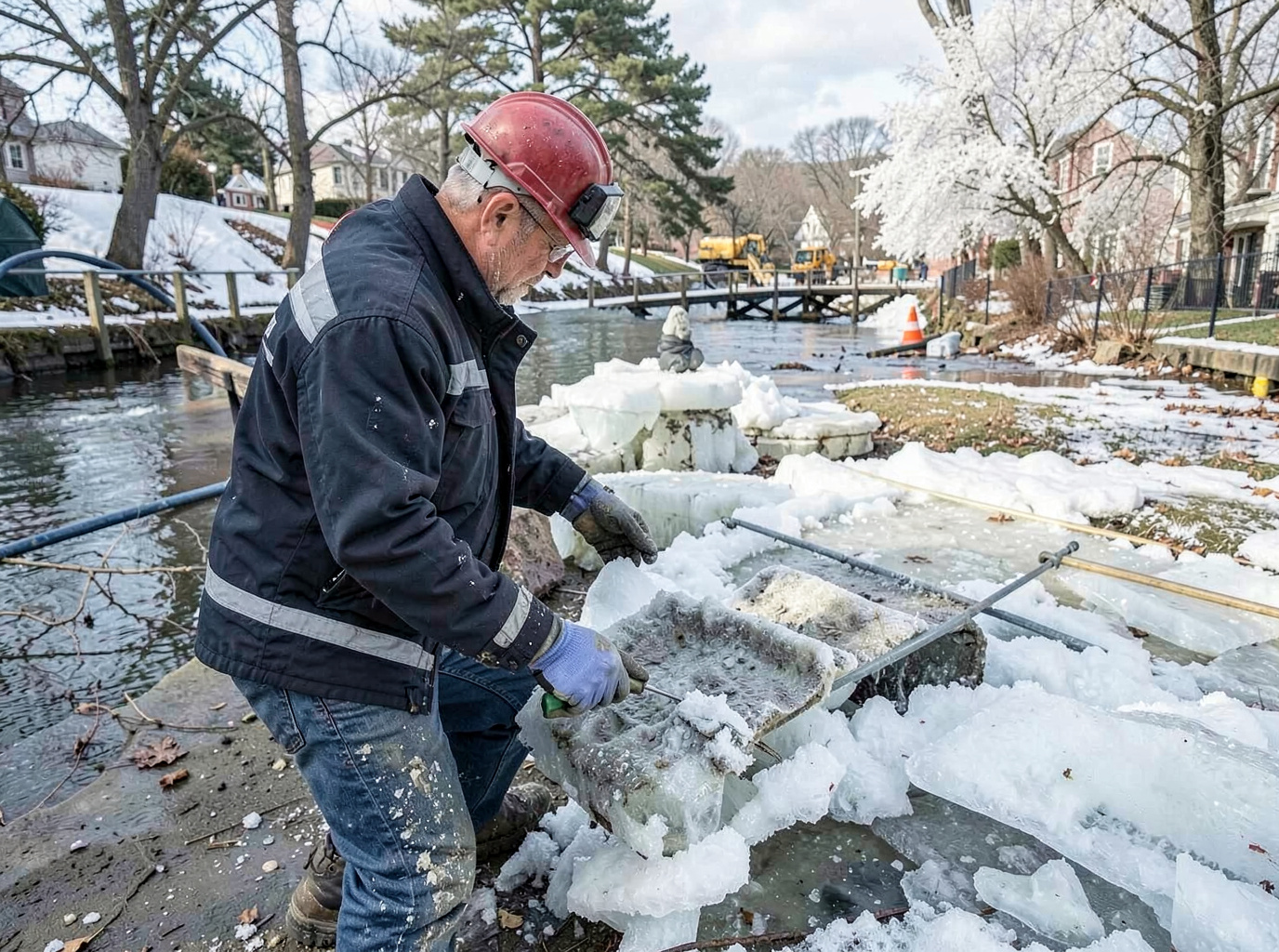
Waterloo's humid continental climate brings repeated freeze-thaw cycles that turn roof snow into ice dams, especially on the steeper pitches common in West Side and East Side homes built before 1960. These dams force water under shingles and into attics, damaging insulation and ceilings. Our crews start by clearing the dam without damaging the roof surface, then address the heat loss that created the dam in the first place.
Many homes near the Grout Museum District and along the Cedar Falls border still have original or poorly upgraded attic insulation and minimal ventilation. When temperatures drop below freezing, warm air escaping through the roof melts snow that refreezes at the eaves. We inspect ridge vents, soffit intake, and insulation depth to stop the cycle rather than just treating the symptom each winter.
Black Hawk County building practices and the age of housing stock mean many roofs lack modern ice-and-water shield at the eaves. Adding this membrane during repairs meets current code expectations and protects against future dams. We also evaluate nearby Cedar Rapids weather patterns, which often mirror Waterloo's, to anticipate how much snow load a given roof can handle before intervention is needed.
Seasonal Guidance
Ice dams form fastest after heavy snow followed by a quick warm-up, common in January and February. Schedule an inspection before the first deep freeze if your attic shows signs of heat loss or if neighbors on the same block have had issues.
Technician insight
In Waterloo the thing that catches most people out with ice dam removal is the number of pre-1970 homes on the West Side and East Side that still have single-layer shingles and almost no ridge ventilation. Once the dam melts, water finds every nail hole because the original felt underlayment has dried out.
East Side Bungalow Ice Dam
Heavy January snow sat on a 1940s bungalow near the Sullivan Brothers Veterans Museum. Meltwater entered the attic and stained ceilings in two bedrooms. We removed the dam, added heat cable in the gutters, and sealed attic bypasses around the chimney. No further leaks occurred during the remaining winter.
Ice Dam Removal and Prevention Services We Offer
✓Ice Dam Removal
Mechanical removal of existing ice dams on Waterloo roofs using specialized tools that protect shingles and flashing.
✓Gutter Heat Tape Installation
Self-regulating heat cable installed in gutters and downspouts to keep meltwater flowing on East Side and West Side homes.
✓Attic Insulation Assessment
Inspection of insulation depth and air sealing in older Black Hawk County homes to locate heat loss that creates ice dams.
✓Roof Ventilation Improvements
Adding or upgrading ridge and soffit vents to balance airflow and reduce attic temperatures in Downtown and Cedar Falls border homes.
✓Ice and Water Shield Installation
Application of self-adhering membrane along eaves to prevent water intrusion when dams do form.
Ice Dam Removal and Prevention Cost in Waterloo, IA
| Service | Typical Range | What Affects It |
|---|---|---|
| Ice Dam Removal | $250–$650 | Depends on roof height, ice thickness, and number of affected eaves. |
| Heat Tape Installation | $400–$900 | Per linear foot of gutter plus power connection; longer runs on two-story homes cost more. |
| Attic Insulation Top-Up | $1.20–$2.10 per sq ft | Material and labor; older homes often need air sealing first. |
| Ice And Water Shield Add-On | $6–$11 per sq ft | Installed during removal when eaves are already exposed. |
Ranges are typical for Waterloo, IA and confirmed with an exact written quote before any work starts.
How it works
- 1
Site Assessment
We inspect the roof, attic, and gutters from both inside and out to identify heat loss points and the extent of any existing ice dam.
- 2
Safe Removal
Ice is removed using steam or non-abrasive methods that avoid shingle damage, with debris cleared from gutters and downspouts.
- 3
Prevention Work
Heat tape, additional insulation, or ventilation upgrades are installed based on findings specific to the home's age and construction.
- 4
Final Walkthrough
Homeowner receives a written summary of conditions found and steps taken, plus recommendations for ongoing winter maintenance.
Pricing
Pricing varies by roof access, dam size, and whether prevention work is added the same day.